A small business owner commits to a Google Ads budget, watches the clicks rise, and then asks the question no dashboard seems to fully answer: Did any of those people buy something?
For most digital advertising channels, the honest answer is probably. Clicks and impressions tell you someone saw your ad, but they don’t tell you whether that person walked through your door or added something to their cart. Attribution has long been one of digital advertising’s biggest challenges.
Card-linked offers (CLO) are designed to solve this problem.
What’s a card-linked offer (CLO)?
A card-linked offer is a promotion attached directly to a customer’s payment card. When a customer pays with their Visa card and the transaction matches the offer criteria, the reward triggers automatically. The business pays only when a sale occurs.
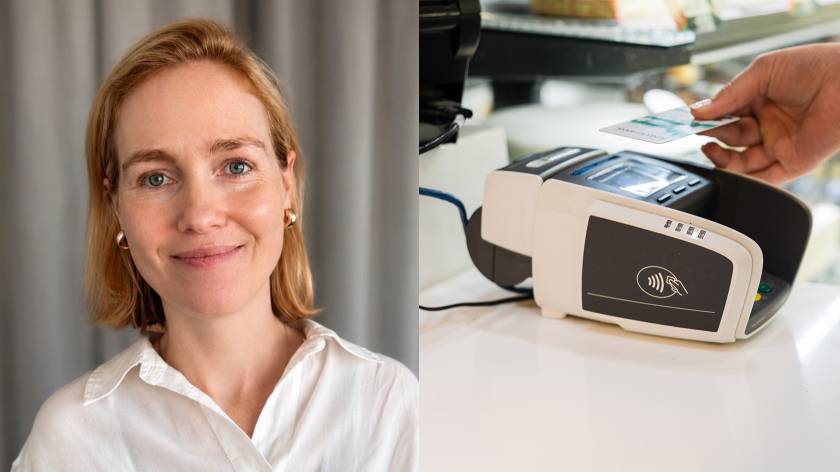
“CLOs are different from pay-to-play channels like Google Ads,” says Stephanie Andrews, head of loyalty at Visa Oceania. “Here, if a customer sees your offer and never redeems it, it costs you nothing.”
Smarter business news. Straight to your inbox.
For startup founders, small businesses and leaders. Build sharper instincts and better strategy by learning from Australia’s smartest business minds. Sign up for free.
By continuing, you agree to our Terms & Conditions and Privacy Policy.
How card-linked offers work in practice
Let’s say a café in South Melbourne wants to attract a new, younger customer base. Using Visa’s card-linked offer platform, they set up a promotion, “Spend $50, get $5 back” targeted at Visa cardholders in their area with a history of spending on dining and drinks.
This offer appears within a customer’s banking or airline app when it is relevant to them, like ING Pocket Perks, Virgin Money Rewards or ANZ NZ’s Loop Program.
If they activate the offer and tap their card to pay, they receive an automatic $5 cashback. There’s no voucher to download or promo code to apply at checkout. Visa’s platform handles every step seamlessly.
The ROI problem solved at point of payment
Unlike traditional digital advertising, CLOs connect directly to the final transaction, making it easier to measure whether a campaign actually drove sales, rather than clicks or impressions alone.
Visa campaign data shows how powerful this can be in driving sales. In some campaigns, simple offers such as “spend $25, get $10 back” have delivered conversion rates of up to 40% across both in-store and online shopping environments. Businesses using card-linked offer campaigns have also seen a meaningful uplift in new cardholder engagement compared with their usual baseline.
The impact can build over time as customers continue engaging with offers. Visa data indicates that customers who redeem an offer once may increase their spending after activation, with higher repeat redemption generally associated with stronger spending uplift.
Customers who redeem offers multiple times tend to spend more and transact more frequently than the average active cardholder, across both physical stores and digital channels.
Compared with traditional loyalty programs, card-linked offers can also be more efficient to operate and easier for businesses to manage. They remove many operational burdens: no plastic cards to issue, no manual reconciliation at the point of redemption and reduced friction for customers claiming rewards.
Big benefit for local businesses
A less obvious strength of card-linked offers for small businesses is local targeting, which can be difficult to achieve efficiently through broader digital advertising channels.
Visa’s platform uses transaction data to connect your offer with people who already spend in your category. For businesses that depend on local foot traffic — cafés, boutiques, service providers — the ability to reach customers nearby rather than three postcodes away represents a significant opportunity, and one Visa is actively developing.
One of the advantages for small businesses is access to a much broader network than they could typically reach on their own, including banking apps, loyalty ecosystems and high-intent customer segments. When a small business sets up a card-linked offer with Visa, it’s plugging into that network, opening up access to channels that customers engage with and trust.
By connecting merchants, financial institutions and consumers through Visa’s network, card-linked offers can reach customers through trusted banking and rewards channels at scale.
How CLOs fit into existing marketing plans
“The first thing is to think about what you’re trying to achieve,” says Andrews. “Is it acquiring a new customer or attracting a competitor’s customer? Re-engaging someone who has lapsed? Or driving more frequent visits from people who already buy from you? The goal will shape the details of your offer.”
She recommends starting with a targeted pilot campaign. “Create a specific offer for a defined customer segment and use the results to adjust the offer before rolling it out to the rest of the customer base. Scale your offers up or down based on what’s working, like any other advertising channel.”
For small businesses, the appeal of card-linked offers is their simplicity. Businesses can start with a targeted campaign, measure results against actual transactions and refine offers based on performance, without many of the complexities associated with traditional loyalty or advertising programs.
Looking ahead, the future of card-linked offers is expected to be more self-service, data-driven and accessible to a broader range of businesses. Historically, many small and medium-sized businesses have lacked access to the sophisticated loyalty and targeting capabilities available to large enterprises.
As card-linked offers mature as a marketing channel, self-service platforms are emerging to bridge this gap, enabling businesses to easily launch, manage and optimise targeted campaigns with measurable outcomes and minimal operational overhead.
Over time, an AI-driven offer builder could also help businesses make more informed decisions by suggesting discount levels and target segments based on campaign goals, reducing the guesswork that often comes with offer setup.
Learn more about how Visa’s card-linked offer solutions could support your future growth at Visa’s Small Business Hub.