“We’re finally at the point where it’s a reality”: The AI network changes Australian businesses need to know about
SMBs stand to gain the most from the latest evolution in AI networking and security.




For decades now, the network has been treated as an afterthought. You design it, install it, then leave it alone. And as long as it keeps working, nobody thinks about it.
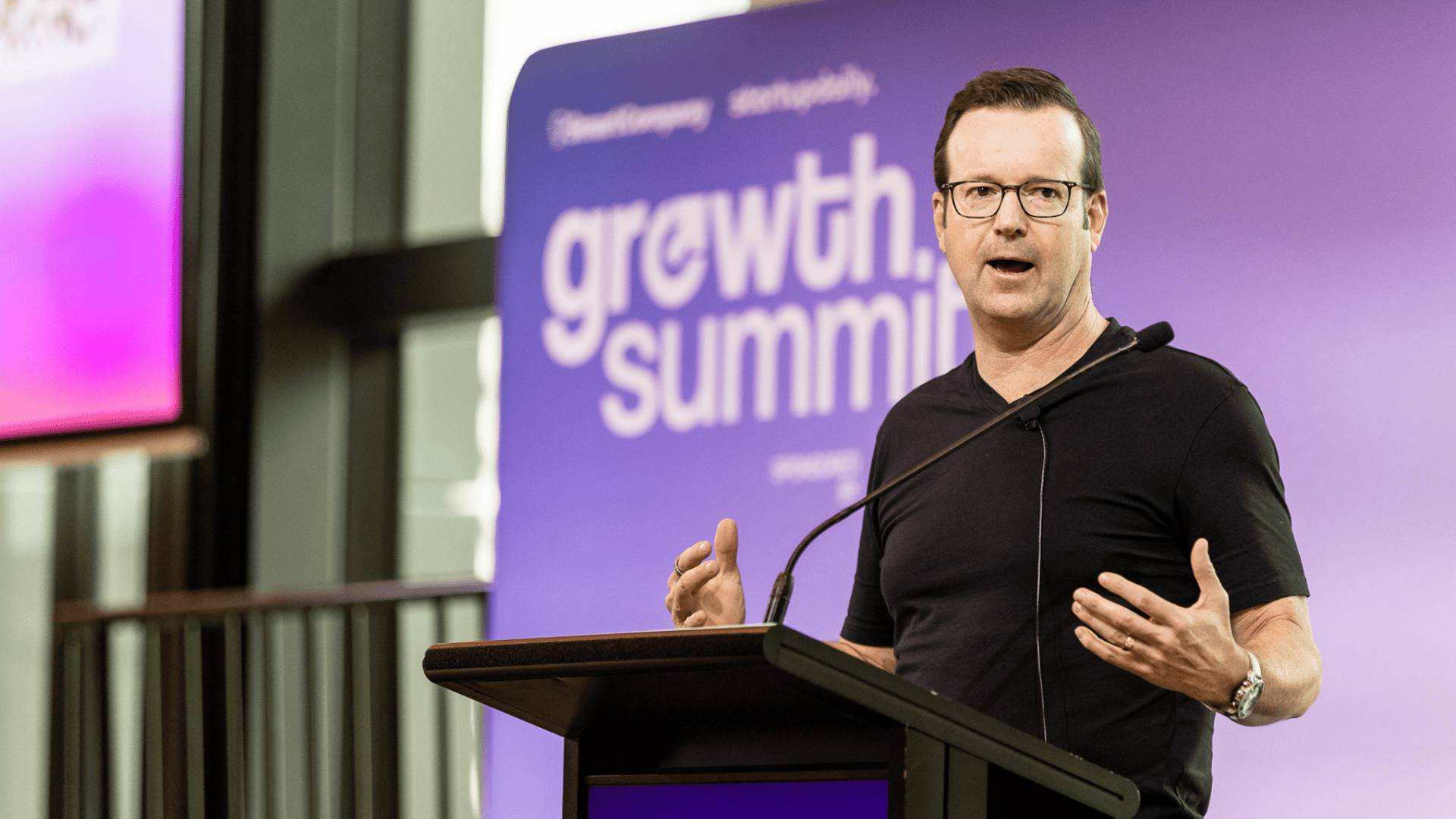
But that approach no longer holds up, according to Andrew Fox, general manager of HPE Networking for Australia and New Zealand.
“That isn’t what you need for a business in 2026 and beyond,” Fox tells SmartCompany.
“You need a network that is dynamic and can change, and can accommodate for what’s currently happening, and can see problems and fix them, or suggest ways to solve issues.
Enter the age of the ‘AI-native’ or ‘self-driving’ network, where autonomous infrastructure can seamlessly optimise and protect modern businesses in real time. Those networking and security advancements will be on full display at the HPE Networking Day in Sydney on October 7 – but we asked Fox to give us a sneak peek ahead of the big event.
The phrase getting all the attention right now is AI-native networking. Fox draws a firm line between that and bolting AI onto your existing infrastructure.
“What you can’t do is take a legacy network from 2015 and just slam AI on top, claim to have an AI-native network and everything would be fine,” he says. “AI-native means that it’s been built from the ground up with AI in mind.”
What that means is having hardware that gathers intelligence from the outset. An AI-native access point is “built to collect information and telemetry constantly”, Fox says – tracking every device and what it’s doing, as well as what the experience actually feels like for the person using it.
That gap between connected and working properly is where the old model breaks down. As Fox puts it, a port glowing green because a security camera is plugged into it doesn’t mean you’re getting a picture.
After years of promises, Fox says the technology has caught up: “AI has got to the point now where we can deliver a network that is self-driving, that learns and reacts and heals even. We’ve been talking about it for a long time, but we’re finally at the point where it’s a reality.”
Enterprises have long had dedicated teams to manage complex network setups. Small and mid-sized businesses generally don’t – which is why Fox thinks they have the most to gain.
Many SMEs don’t have a dedicated expert. “They might have a team member who happens to have some skills, and so they became the go-to person for anything technology. That’s not a great way, and it doesn’t scale very well,” Fox shares.
The first benefit is fewer problems reaching users at all. “To be able to have a network that manages itself, that can see what’s going on and adapt, that can solve problems before the users even clock the fact there’s an issue – that’s the exciting piece.”
Fox touches on a scenario most people will recognise: a company-wide Teams call where the connection is terrible, followed by a delayed investigation once the problem has vanished.
A network that can spot what went wrong – or better, adjust mid-call – changes that entirely.
But as networks grow, so does their exposure, Fox warns: “As branches go from having 100 devices to 1000 devices, the complexity creates more attack surfaces. It’s very hard for human beings to respond fast enough.”
AI-native networks help in two ways. First, by spotting threats faster. Second, by enforcing one security policy consistently across wireless, wired and wide-area connections.
The ultimate goal is to stop intruders at the edge, because a firewall around the data centre no longer matches how people work.
“We’ve got to keep people safe wherever they are,” he says.
So who’s accountable when the network makes its own decisions? As Fox puts it: “Do you jump in your self-driving car and press the full self-drive button the second you jump in? Probably not.”
Instead, businesses choose which fixes to automate and which to escalate. Fox describes a US customer whose security cameras were all found dead after a theft – the sort of silent failure a network can now detect and restart automatically, while bigger decisions stay with the IT team.
Non-profit care provider Mercy Health Australia is rolling out AI-native access points across more than 40 sites, ensuring the organisation’s network can react to resident needs while ensuring service quality isn’t impacted.
For its 2600 residents, that means reliable connectivity for video calls with family and friends. For clinicians, it means the accessibility to case management at the bedside instead of a folder at the end of the bed. Overall, it means greater trust, greater attention to residents’ needs and greater capacity to expand the network organically.
Fox and his team will be demonstrating the technology at their upcoming HPE Networking Day, with keynote speaker Rami Rahim, HPE Networking’s global president and general manager.
“Nothing proves the technology like a proper demonstration,” Fox says. “It’s the touch and the feel and seeing the technology in action, which is the big value for the day.”
Register now for your free spot at the HPE Networking Day on October 7 at Doltone House, Jones Bay Wharf, Sydney.

Simon Jones is a writer, editor and freelance content marketer working across the technology, finance, B2B and B2C sectors.

Hewlett Packard Enterprise (HPE) is a global leader in essential enterprise technology, bringing together the power of AI, cloud and networking to help organisations achieve more. As pioneers of possibility, HPE helps customers optimise operational performance, transform data into insights and drive innovation across industries. Through its expertise and technology solutions, HPE empowers organisations to unlock new opportunities and accelerate their digital transformation.