Every company sounds identical now, and it started before AI did
AI may be making bland brand language easier to produce, but it did not create the problem.



Pull up 10 competitor websites in any category right now. Software, wellness, financial services – it doesn’t matter.
Count how many use the word “innovative” in the first paragraph. Count how many promise to “empower” you. Count how many describe their team as “passionate.”
By the third site, you’ll stop counting because the exercise gets boring and that’s the point.
Everyone wants to blame AI for this. It’s an easy villain and it’s not entirely wrong. Generative tools do make it easier and faster to produce more of the same.
But I was watching brands collapse into each other for a decade before any of these writing tools existed.
AI didn’t cause the sameness crisis. It just put a machine behind a bad habit companies already had.
Here’s how it actually happens: a company hires a marketing lead. That person inherits three years of decks, brand guidelines and competitor research that all say roughly the same thing, because the last three marketing leads inherited the same thing from the three before them.
Nobody sits down and asks what this specific company believes that the other four in its category don’t. Instead, everyone reaches for the same shortlist of safe adjectives, because safe adjectives never get you fired in a board meeting.
Now add a language model that was trained on the exact same internet full of the exact same safe adjectives. It doesn’t invent sameness. It just writes it faster and cheaper than the last agency did, which means more of it gets produced, which means the gap between brands that had a real point of view and brands that didn’t gets easier to spot, not harder.
That’s the part people miss. You can’t blame AI for erasing differentiation companies never had in the first place.
At BrandBossHQ, we call the countermeasure “Strategic Storytelling™” and the entire premise exists to stop brands from defaulting to the same three adjectives everyone else in its category reaches for.
It starts by refusing the easy answer. Not “innovative”. Not “customer-first”. Instead, ask: why should a customer choose this brand over the competition? What problem has it dedicated itself to solving, or what goal is it committed to helping its ideal audience achieve?
For example, there are lots of car companies, but Volvo is dedicated to protecting drivers from harm in an accident. Their message is singularly focused on safety, whereas Porsche is dedicated to one-of-a-kind performance, Mercedes is dedicated to luxury and Tesla is dedicated to the EV transition.
It’s not that any one of these doesn’t believe in the value of what the other sells. It’s that they are disciplined enough to know that people buy based on what they believe is the single strong suit of a brand, so they keep themselves from promising the moon.
No one ever went to a buffet restaurant for a great steak. You go to a steakhouse with a great reputation and track record. That’s what these brands endeavour to create.
Most leadership teams have never been asked that question and the silence that follows is usually the most useful five minutes of the entire engagement.
If nothing comes to mind, that’s a positioning gap no amount of clever copy will close.
The brands still standing out five years from now will be the ones that had something specific enough to say that no model, and no competitor, could say it for them.
Learn more about Strategic Storytelling™ at BrandBossHQ.

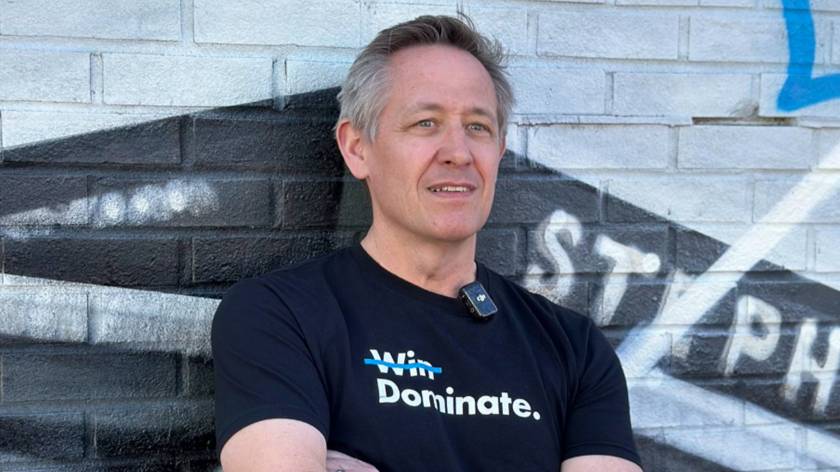
Bill Harper is the founder of BrandBossHQ. He is passionate about helping businesses discover their true purpose – and turning that insight into exceptional experiences that bind brands and their customers together.

BrandBossHQ helps growth-minded businesses dominate their category through Strategic Storytelling™, brand strategy, consumer research and creative campaigns.